


- Home
- Self Publishing
- Why YPS?
- Another Perspective
- Our Services
- The Production Process
- Editing & Design
- Printing and Binding
- eBooks
- What does it cost?
- Distribution
- FAQs
- Testimonials
- Startup Publishers
- Publisher Book Distribution
Editing & design
There are a number of production stages in publishing that you may feel confident doing yourself, in which case the production cost will be lower. We can, however, handle it all for you. Either way, you will always remain in control, as we will consult you at all stages.
- Copyediting and/or proofreading
- page and cover design
- page by page layout
- proofs
- ISBNs and barcodes
- Nielsen BookData
Copyediting and/or proofreading
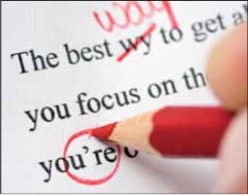
If you choose to have your text copyedited or proofread it should be arranged before the book is prepared page by page. You are the expert on the content, however there could be mistakes in spelling, punctuations, sense and consistency.
You may have become too close to your text and can no longer notice errors that will become all too obvious when the book is printed. We have experienced editors who will highlight and point out any such errors.
All textual queries or changes highlighted by our editors will be referred to you for approval before we start the page layout.
Copyediting is a must for clients who are thinking big and considering a full commercial release. YPS can offer advice on whether this is a viable prospect.
Should this be an opportunity the content of your book will need to be the best it possibly can be and any budget used here will be money well spent.
Manuscripts can be corrected; candid reviews highlighting spelling and grammar errors cannot.
Page and cover design
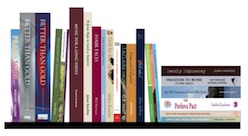
The presentation and design of your publication is extremely important. It is the cover that provides the initial visual impact that attracts potential purchasers. We will discuss your ideas with you and then turn your ideas into a cover design. We can include photographs and illustrations if required.
We will work with you and advise you on the ideal page size, how the book will look and which typefaces to use. We will prepare specimen pages and send them to you for your comment and approval, and will amend the designs if you are unhappy with any aspect.
Remember, it is your book we are preparing!
Page by page layout
Once we have a page design that you are happy with, we will prepare the book page by page. If there are any photographs, illustrations, figures or tables, they will be included in the text at the appropriate place. If we need to prepare figures or scans, there will be a small additional charge.
Proofs
First Proofs: We will provide you with a set of page proofs to check for any errors or mistakes. This stage is not an invitation to re-write! It is important that the text has been carefully edited before this stage. If major changes have been made at the proof stage it will be necessary to charge for the additional work involved.
Second Proofs: When we have made the amendments and changes required from the first proofs, we will send you a second set of proofs. This is so you can check the amendments have been interpreted correctly, and is your final check before we proceed to the next stage.
Proof Bound Copy: After the amendments to the second proofs have been completed, a proof bound copy is printed. This will allow you to see and feel the completed book. It will have been printed on the paper to be used on the main print run. Corrections can still be made at this stage, but they will be chargeable they should have been picked up at the earlier proof stages
ISBNs and Barcodes
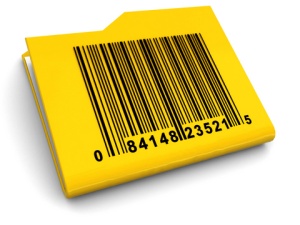
ISBNs (International Standard Book Numbers) are obtained from the ISBN agency. As you are the publisher, the request must be submitted in your name. You can organise this yourself or we can fill in the form for you and send it to you for signature. It is not essential to have an ISBN, but if you intend to sell through bookshops or on the Internet, it is necessary. The British Library, libraries, book wholesalers and bookshops use the ISBN as a unique reference number to record information about the book on their computer systems.
Having your own ISBN number means that YOU own all the rights associated with your book. If we, or any other company, allocate you an ISBN, we become the publisher and hold the rights to your book. These could be foreign rights, film or serialisation rights etc.
The application form is rather complex and technical. If you wish, we will complete it on your behalf and pass it to you for signing and forwarding to the ISBN agency.
You can contact the ISBN agency at: nielsenbookdata
Barcodes are based on the ISBN. Once you have an ISBN, we can arrange the barcode for you. A bookshop will scan the barcode to access information about the book, such as the price and stock level.
Nielsen BookData
Nielsen BookData helps publishers sell books by making sure booksellers have the most accurate, comprehensive and up-to-date information available about your title(s).
It requires the type of information that helps identify, find, order and sell your books. The ISBN, author, title, date of publication and price are essential, but there can be much more. For instance, a description of the content, a short biography of the author, the cover image, the format of the book and a standard subject code to help booksellers searching in a specific subject area can be provided. You can tell them who distributes each of your books, the markets in which they are available, any restrictions on sale, and much more.
Their web address is Nielsen BookData
If YPS distribute your title we will enhance your listing on Nielsen Bookdata using our own account.